
Art’s Tree Service provides land clearing in Sarasota and Manatee County, including selective clearing, brush removal, and debris haul-away.
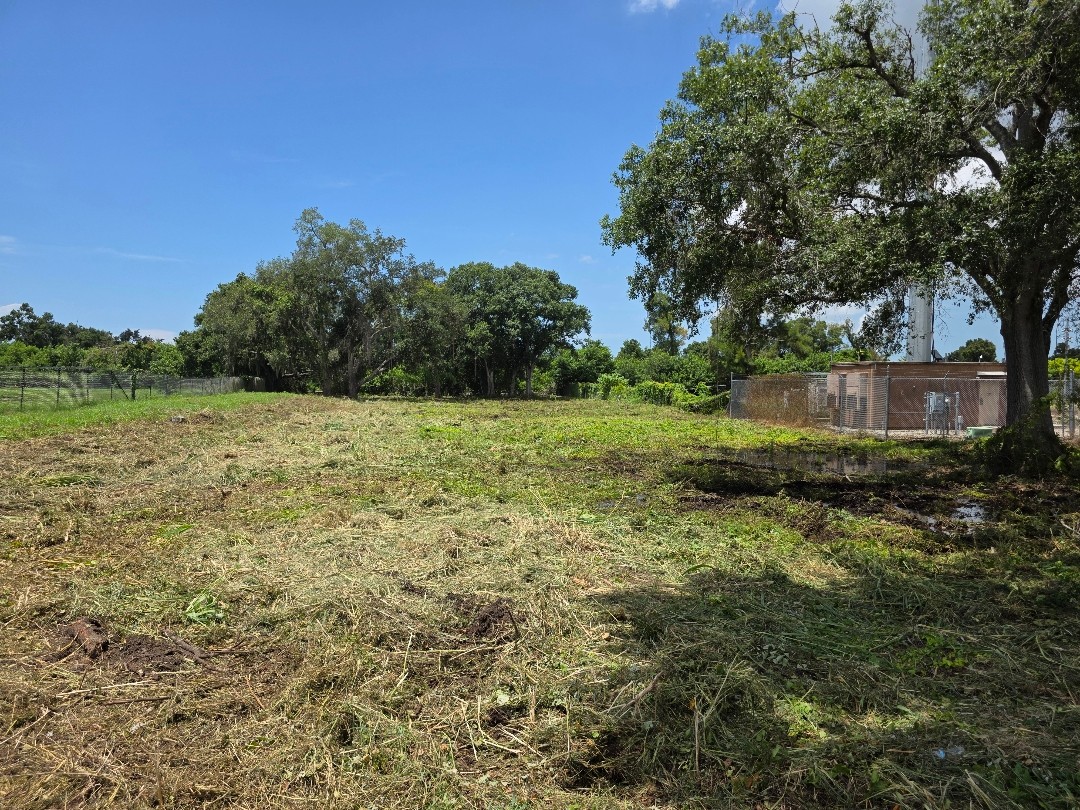
Featured photo: A Sarasota property after vegetation regrowth clearing by Art’s Tree Service, from the company’s August 10, 2026 project record.
What should you have ready before the visit?
A little preparation helps the estimator understand both the property and your priorities.
- Have the property address and any available survey or site plan ready.
- Describe the specific area you want cleared.
- Explain what you want to use the space for afterward.
- Identify trees you would like to keep.
- Gather any existing permit documents or association requirements.
You do not need to decide which equipment the crew should use. Focus on the result you want and the property information you already have.
How much of the property actually needs clearing?
Start with the purpose of the project. Opening an overgrown section of a residential yard is different from clearing vegetation within a planned building footprint.
For example, a Sarasota homeowner may want access to a rear fence while retaining mature shade trees. A Manatee County property owner may need vegetation removed from a specific portion of a larger parcel. Both projects involve clearing, but their boundaries and priorities differ.
Walk through the proposed work area with the estimator where it is safe to do so. Point out what should stay as clearly as what should go. If a boundary is uncertain, resolve it before authorizing removal near neighboring property.
Ask whether selective clearing can meet your goal. Selective clearing means removing designated vegetation while retaining chosen trees and other areas.
Which local requirements should you check?
Permit questions should begin with the property’s exact location and proposed work. A mailing address alone does not establish which local authority handles the project.
Sarasota County’s environmental permitting guidance identifies its tree-permitting role in unincorporated Sarasota County and Venice. It directs owners in Sarasota, North Port, and Longboat Key to their respective jurisdictions. Start with the county’s environmental permitting guidance to identify the appropriate contact.
In Manatee County, common areas, commercial properties, and conservation areas have specific tree-removal rules. The county also identifies exceptions to the usual treatment of invasive-tree removal, including certain larger clearing projects. Review the county’s tree-removal guidance before assuming vegetation can be removed without review.
During the estimate, establish who will confirm requirements, obtain any necessary approvals, and communicate restrictions to the crew. If the property belongs to an association, check its requirements separately.
How will the trees you keep be protected?
Keeping a tree involves more than leaving its trunk standing. The work plan should consider the surrounding soil, roots, equipment routes, and material-storage areas.
University of Florida IFAS guidance identifies soil compaction, added fill, and trunk injuries as sources of construction-related tree damage. Planning and protective barriers can help prevent that damage. See UF/IFAS tree-protection guidance.
Tell the estimator which trees matter to you, then ask how clearing will proceed around them. Where a tree’s condition or suitability for retention is uncertain, discuss whether an assessment is appropriate.
Art’s Tree Service works with an ISA Certified Arborist. Its tree health care and consultation services provide a starting point for those questions.
What should the written estimate explain?
A useful estimate describes the work clearly enough that you can compare proposals and recognize when the agreed job is complete.
Look for details about:
- Clearing limits: The section of the property included.
- Vegetation: Trees, brush, and undergrowth designated for removal.
- Access: Gates, driveways, structures, and other constraints.
- Stumps: Which stumps are included and what work is proposed.
- Debris: What will be chipped, removed, or left by agreement.
- Completion condition: What the area should look like afterward.
Discuss stumps explicitly. If the next project involves a fence, driveway, or building, explain that use before the clearing scope is finalized. The required work may differ from a simple surface cleanup. Learn more about stump grinding and removal.
Also clarify where the tree-work scope ends and any separate construction or site work begins.
A Sarasota regrowth-clearing project
Art’s Tree Service’s August 10, 2026 RealWork project record describes maintenance of two previously cleared areas in Sarasota. The crew used equipment to mechanically mow and reduce regrowth of tall grasses, weeds, and other vegetation within those areas. The record also notes treatment of visible Brazilian pepper and carrotwood stumps to address resprouting, followed by cleanup.
The featured photo shows cut low vegetation across an open area, with mature trees and fencing still standing. This was maintenance of previously cleared space, a useful example to discuss if your own property has become overgrown again. The work your property needs should be established during its own site visit.
Frequently asked questions
Can I request an estimate for only part of my lot?
Yes. Art’s Tree Service offers selective clearing. Identify the intended work area and explain what you want preserved so the estimate reflects that limited scope.
What affects the price of land clearing?
The estimate considers the area to clear, vegetation density, equipment access, debris disposal, and the stump work requested. Ask whether a minimum job charge or minimum scope applies, whether machinery can reach the work area, how debris will be handled, and whether stump grinding, removal, or other treatment is included. Request those details in writing; a site visit establishes the proposed scope and price.
Should I remove brush before the estimator arrives?
Discuss preparation with the company first. An initial visit helps establish what should be removed, what should remain, and whether requirements need to be checked before work starts.
Is stump work automatically included?
Ask for it to be stated explicitly. The estimate should identify the stumps involved, the proposed treatment, and any additional work needed for your intended use of the space.
What information should I send with my request?
Provide the property location, a short description of the clearing area, your intended use, and known access restrictions. Mention trees you want to retain and any plans or approvals already available.
Ready to discuss your property?
Art’s Tree Service offers free, on-site written estimates for land-clearing projects across Sarasota and Manatee County.
Request a land-clearing estimate or call (941) 877-1317. Explain what you want to accomplish so the visit can focus on the clearing boundaries, trees to preserve, and work needed for your next step.