
Key Takeaways
- Sarasota's two-season climate (a wet season from June through September and a dry season from October through May) shapes when tree care tasks are most effective.
- Pre-storm inspections in spring are more valuable than rushed pruning immediately before a named storm.
- Dry-season irrigation and mulching protect roots when rainfall drops.
- Palms require different care than hardwood trees throughout the year.
- Preventive care is usually less disruptive and less expensive than emergency work.
Sarasota's subtropical climate does not follow the four-season calendar that most tree care guides are written for. The region has a distinct wet season from June through September and a dry season from October through May. Temperatures rarely reach freezing, and the most significant weather threats are tropical storms, summer heat and periodic drought.
A useful tree care calendar for Sarasota reflects those conditions rather than applying advice written for temperate climates.
What Does Sarasota's Climate Mean for Tree Care?
The wet season brings frequent afternoon rain, high humidity and the risk of tropical storms and hurricanes. The dry season can be prolonged, especially from January through April, when some areas receive very little rainfall for weeks at a time.
Most of Sarasota's tree canopy is made up of species that evolved in Florida's subtropical conditions, including live oak, cabbage palm, laurel oak, slash pine, magnolia, bald cypress, and others. These species are generally well adapted to the region's climate, but they still benefit from periodic inspection, appropriate pruning and root-zone protection.
Non-native ornamental trees and recently installed trees may require more attention, particularly during drought and after storms.
Dry Season: October Through May
Inspect structure and identify hazards
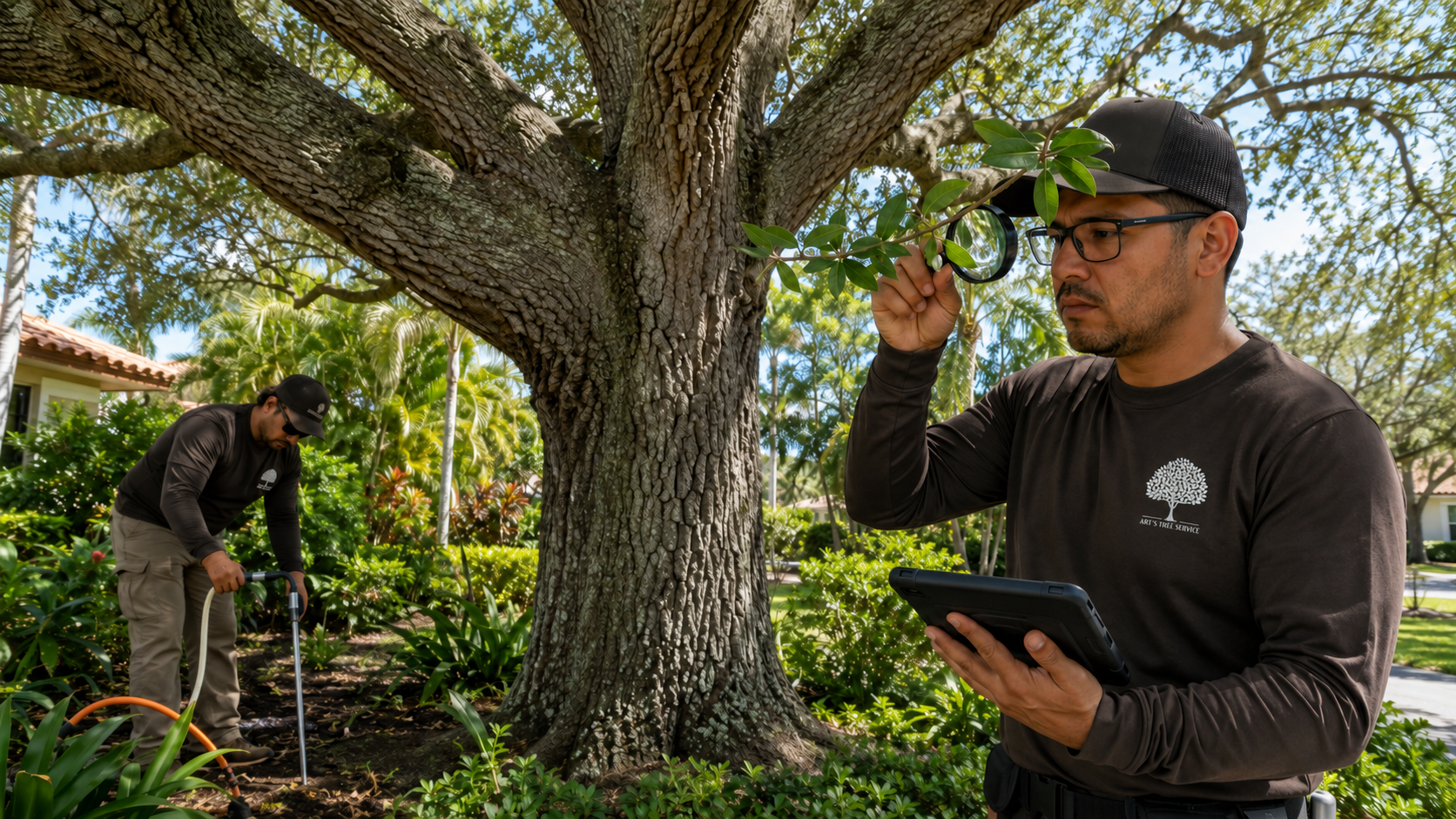
The dry season, when many deciduous trees have reduced foliage, is a practical time to evaluate branch structure, identify deadwood and look for cracks, cavities or co-dominant stems with included bark. Problems identified now can be addressed before hurricane season begins in June.
UF/IFAS guidance on mature trees notes that preventive pruning to remove defects is more effective than reactive work after a failure.
Schedule structural pruning for young trees
Young trees benefit from early structural pruning to develop a single dominant leader, well-spaced scaffold branches and clearance from structures. This work is easier and less expensive when trees are small. Waiting until a tree is large increases the cost and the wound size of each correction.
Monitor soil moisture and irrigate when needed
Sarasota's dry season can stress trees, particularly those planted within the past two to three years. Check soil moisture a few inches below the surface rather than relying on a fixed irrigation schedule. Newly planted trees need water at the root ball, not at the trunk.
Established native trees generally do not need supplemental irrigation during a typical dry season, but extended drought may require spot watering for trees showing stress symptoms.
Refresh mulch correctly
A 2- to 3-inch layer of mulch over the root zone helps retain moisture, moderate soil temperature and reduce competition from grass. UF/IFAS Sarasota County recommends keeping mulch away from the trunk to avoid trapping moisture and obscuring problems at the root flare. Do not create a mulch volcano.
Plan new plantings for the right site
Late dry season, from February through April, can be a practical time to plan new trees. Matching species to site conditions, including mature size, sun exposure, soil drainage, wind exposure, and clearance from structures and utilities, is more important than the planting date. Our tree planting and installation service can help evaluate the site before a tree is selected.
Pre-Storm Season: March Through May
Complete structural assessments before hurricane season
The most effective storm preparation happens well before a storm is forecast. A pre-storm inspection can identify hazardous branches, co-dominant stems with included bark, root problems and trees that may not be good candidates for retention near structures.
Pruning to remove known defects before hurricane season is more effective than rushed work when a storm is approaching. Rushed pruning under pressure can result in poor cuts, removed live wood and trees that are less stable than before.
Address deadwood and weak attachments
Deadwood, cracked branches and branches with weak bark inclusions are the most common sources of storm failure. Removing these before hurricane season reduces the load the tree carries into the storm.
Protect roots from construction and compaction
Spring is a common time for construction, landscaping and irrigation work. Trenching, grade changes and soil compaction within the root zone can cause delayed decline that appears months or years later. Establish a protection zone around important trees before work begins.
Wet Season: June Through September
Monitor for storm damage after each event
After a tropical storm or hurricane, inspect trees for new leans, lifted roots, hanging limbs and trunk damage. Some damage is not immediately visible and may develop over days. Our emergency tree removal service is available for urgent hazards.
Watch for pest and disease activity
Warm, wet conditions can favor certain fungal diseases and insect activity. Laurel wilt affects redbay and other susceptible trees in the laurel family. Stressed oaks may experience different pests, diseases and decline symptoms that require proper identification. Hypoxylon canker can follow drought stress. Our tree health care service can evaluate symptoms and recommend treatment when appropriate.
Manage drainage and root-zone flooding
Sarasota's wet season can saturate soils for extended periods. Trees in low areas or near impervious surfaces may experience root-zone flooding that stresses roots and creates conditions for disease. Improving drainage or adjusting irrigation schedules may help.
Avoid heavy pruning during peak storm season
Major pruning during active hurricane season can remove live wood that the tree needs and may expose wounds at the worst time of year for healing. Routine maintenance can continue, but major structural work is generally better scheduled outside the peak storm months.
Early Fall: October
Reassess trees that experienced storm damage
A tree that survived a storm may still need restoration pruning or follow-up monitoring. New sprouts do not automatically mean the original structure is restored. UF/IFAS notes that storm-damaged trees can require a multiyear recovery and pruning plan.
Review irrigation coverage
As rainfall becomes less reliable, confirm that new trees and stressed trees receive water where the absorbing roots are located. Fix broken heads that spray the trunk and adjust run times to actual site conditions.
Refresh mulch correctly
Maintain a shallow layer over the root zone, keep the root flare visible and do not bury surface roots with added soil. Mulch against the trunk can trap moisture and obscure problems.
Plan planting for the right site
Fall can be a practical time to plan a new tree because the hottest part of summer is passing, but success depends on species, site conditions, irrigation and installation. Our tree planting and installation service can help match mature size, sun, soil moisture and clearance to the property.
A Simple Sarasota Tree Care Calendar
| Time of year | Main priorities | What to avoid |
|---|---|---|
| January to February | Inspect structure, monitor dry-season moisture, plan pruning | Automatic overwatering and topping |
| March to May | Complete pre-storm assessments, address dead or weak branches, protect roots | Waiting until a storm is forecast |
| June to September | Monitor wind and rain damage, drainage, pests and new trees | Heavy last-minute pruning and hurricane-cut palms |
| October to December | Follow up on storm damage, review irrigation, refresh mulch, plan planting | Ignoring delayed decline or root-zone changes |
This calendar is a planning tool, not a prescription for every tree. A mature live oak, a newly installed tree and a cabbage palm require different care.
How Do You Know When Professional Tree Care Is Needed?
Request help when:
- Work requires climbing, rigging or a chainsaw above ground
- A branch is near a roof, screen enclosure, driveway or utility line
- The tree has a new lean, crack, cavity or root movement
- Deadwood is too large to remove safely from the ground
- The canopy is thinning or declining without a clear cause
- You need to determine whether pruning, support, treatment or removal is appropriate
Art's Tree Service provides local service throughout Sarasota, Sarasota County and surrounding communities.
Frequently Asked Questions
How often should trees be trimmed in Sarasota?
There is no safe universal schedule. Frequency depends on species, age, growth rate, condition, location and the pruning objective. Young trees may benefit from periodic structural pruning. Mature trees should be pruned only for a defined reason.
Should trees be trimmed before hurricane season?
Known hazards and structural issues should be evaluated well before hurricane season. Proper pruning may reduce certain risks, but no pruning can make a tree hurricane-proof. Avoid rushed or excessive pruning immediately before a storm.
Does summer rain provide enough water for every tree?
Not always. Rainfall may be uneven, root balls may drain differently from surrounding soil and some sites remain too wet. Check actual soil conditions before watering.
What is the best mulch depth for Sarasota trees?
UF/IFAS Sarasota County recommends a 2- to 3-inch layer. Spread it broadly and keep it away from the trunk rather than piling it into a volcano.
When should a tree be inspected after a storm?
Inspect from a safe distance once conditions clear. Arrange prompt professional help for a new lean, lifted roots, a split trunk, hanging limbs or damage near a structure or power line.