
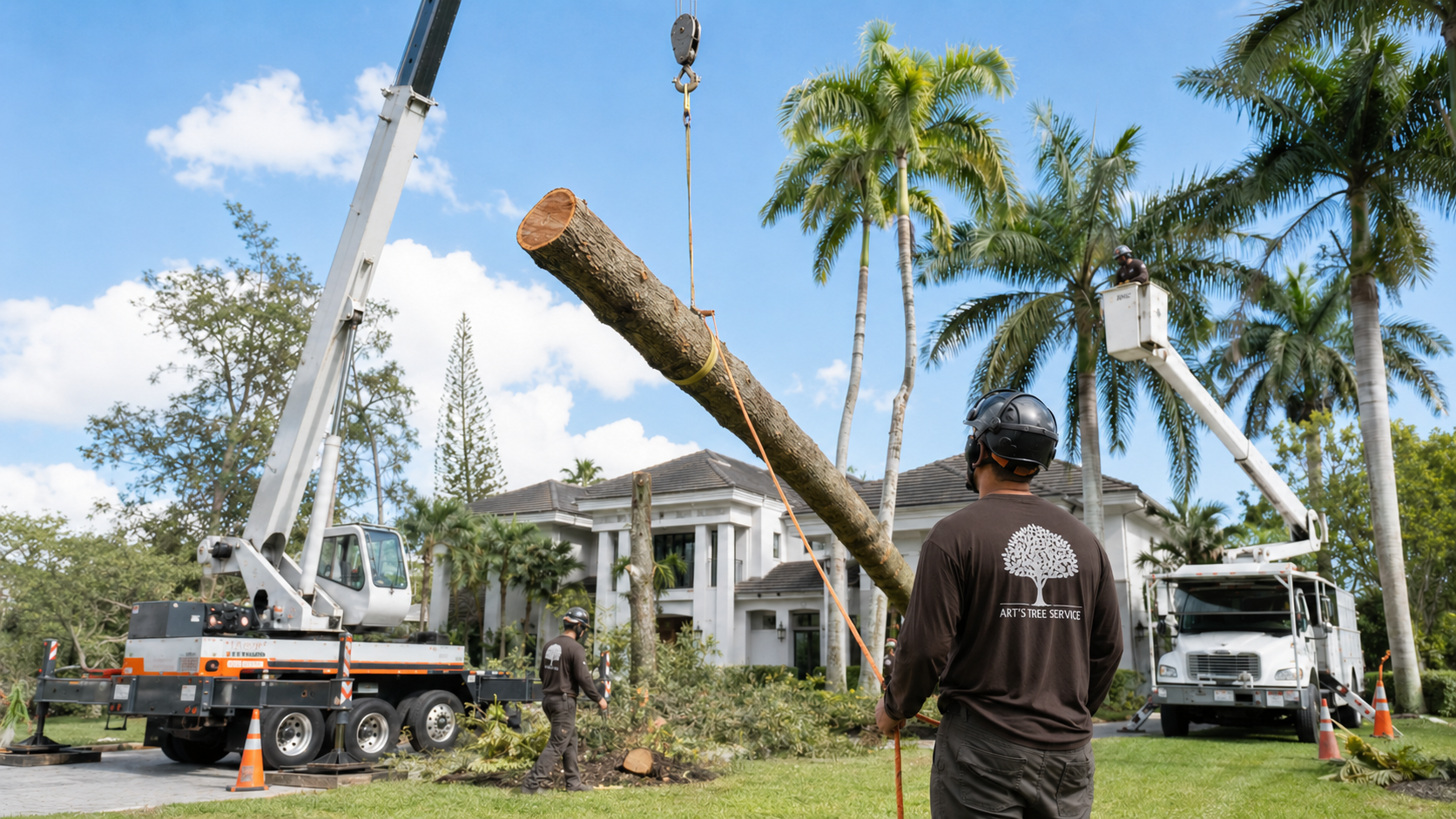
Tree Removal
Plan controlled removal for dead, hazardous, storm-damaged, or unwanted trees, including access, rigging, debris, and optional stump work.
Explore Service
North Port tree work often begins where a maintained yard meets a wooded edge. Pines, palms, drainage swales, canals, long driveways, and newly developed lots create projects that can range from one precision cut to broader clearing and debris removal. Art's Tree Service provides trimming, removal, stump grinding, planting, storm response, land clearing, and tree-health support throughout North Port. The estimator reviews the requested result and the route needed to reach it, helping turn a vague concern into a defined scope with realistic cleanup expectations.
North Port properties often need more than traditional trimming. The services below cover hazardous trees, storm debris, overgrown edges, stumps, planting, lightning concerns, and ongoing canopy care, allowing owners to choose the work that matches the way the property is used.
For local information, visit City of North Port information.
Plan controlled removal for dead, hazardous, storm-damaged, or unwanted trees, including access, rigging, debris, and optional stump work.
Explore Service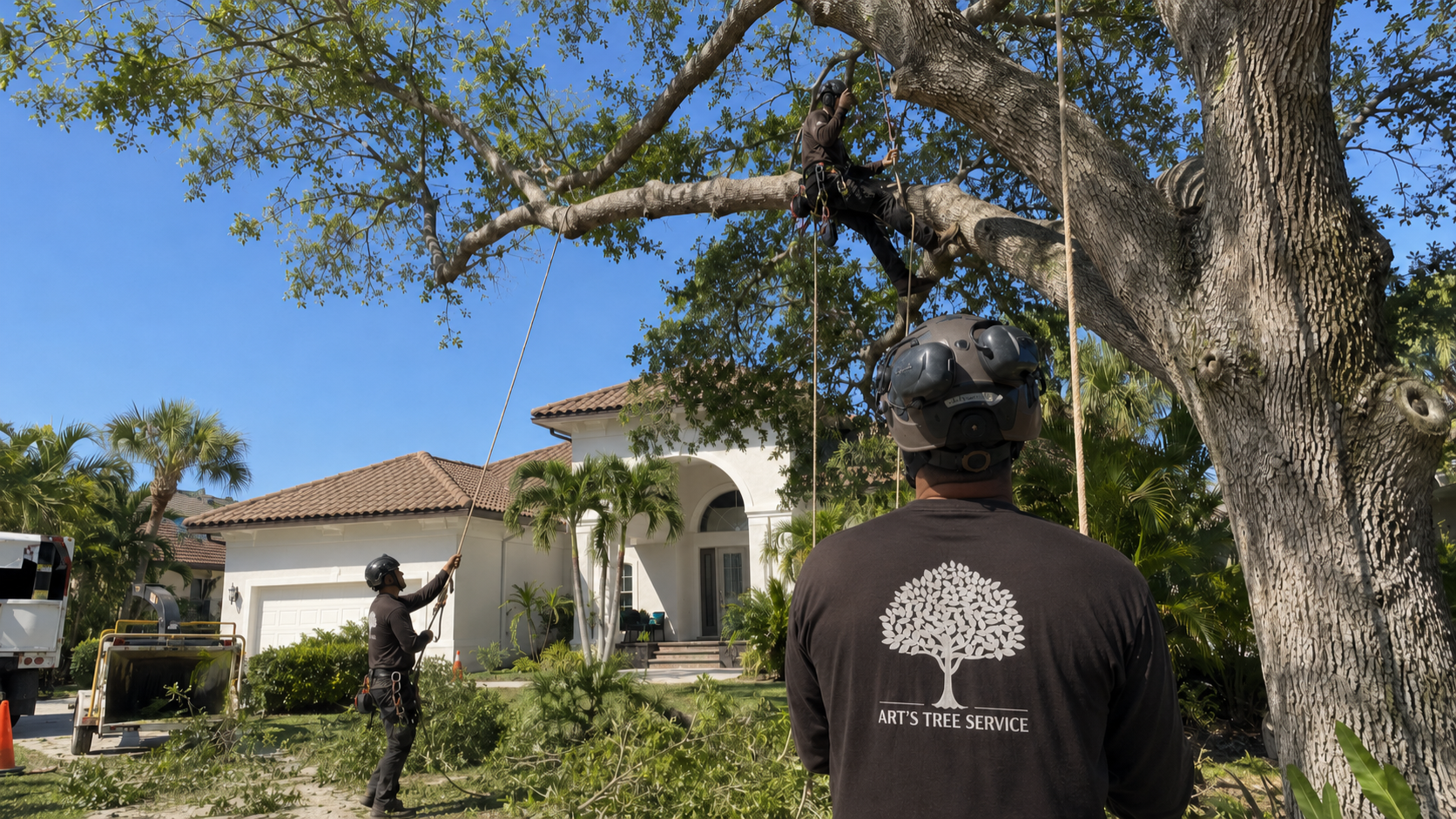
Improve clearance, canopy balance, and storm readiness by trimming damaged, overextended, or conflicting branches around the property.
Explore ServiceSupport tree structure and long-term health with selective pruning planned around the tree species, condition, growth pattern, and surroundings.
Explore Service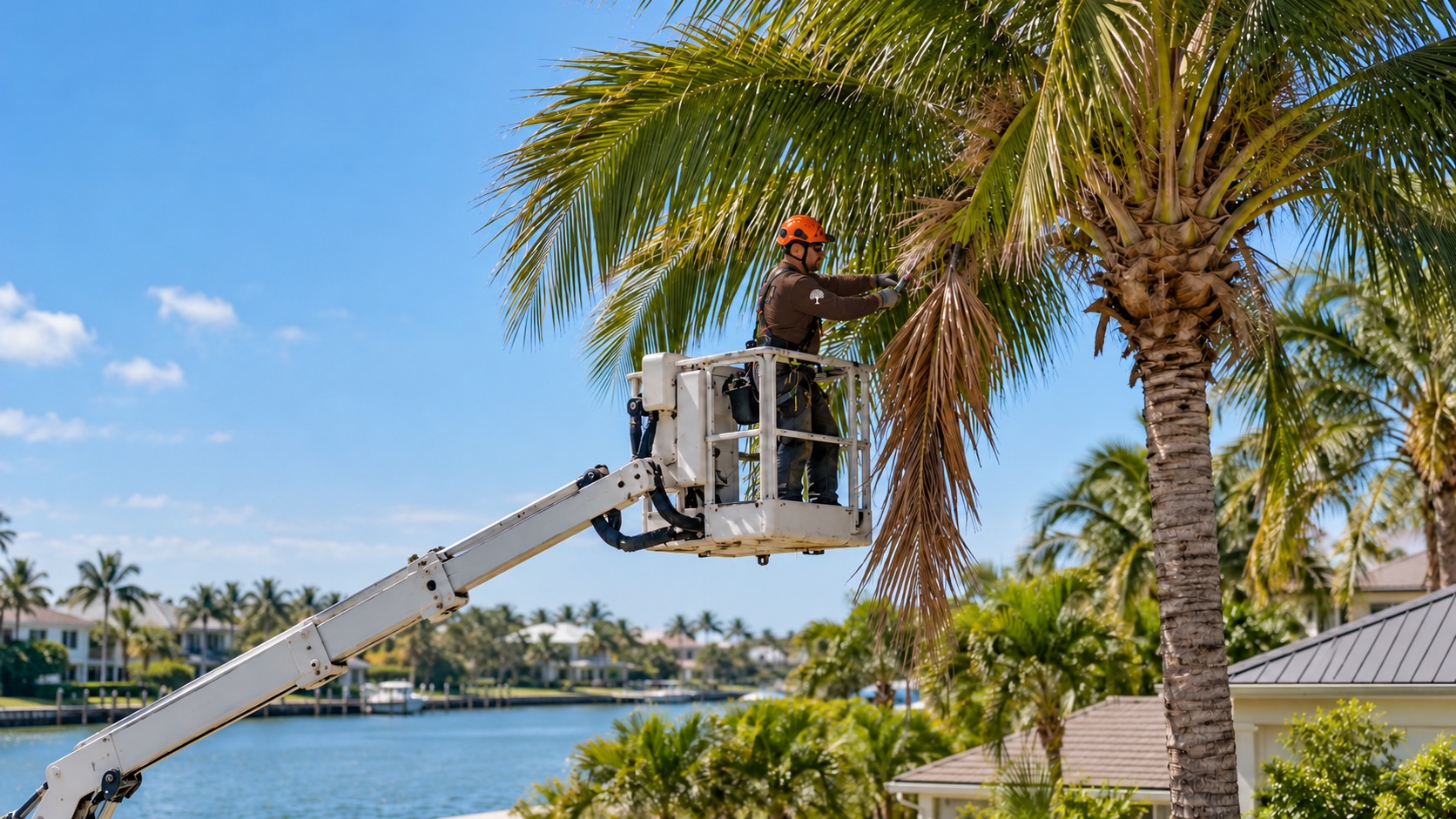
Remove dead or damaged fronds and hanging material while avoiding unnecessary cuts that can affect healthy palm growth.
Explore Service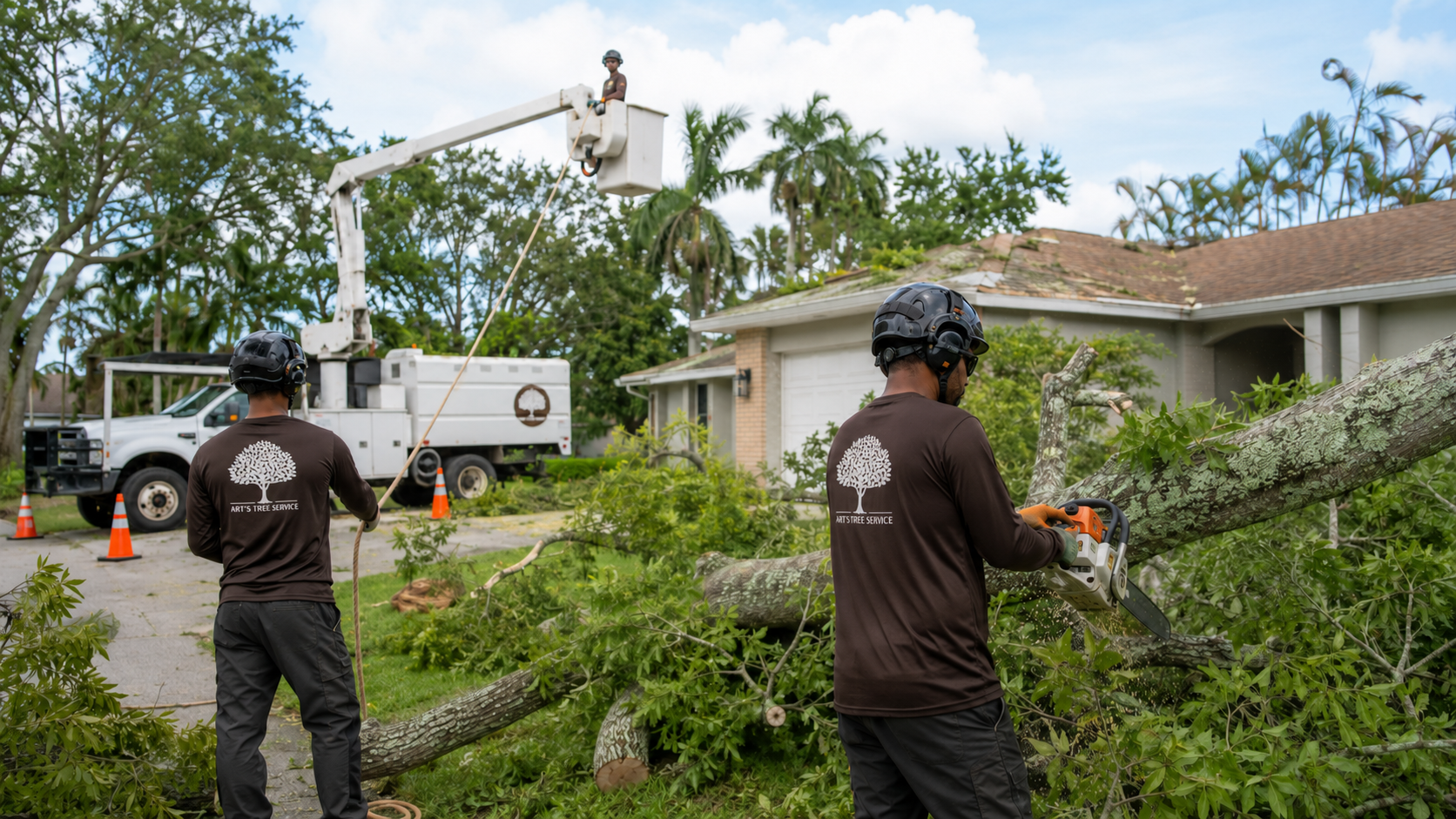
Respond to fallen, split, storm-damaged, or immediately hazardous trees with a plan for access, stabilization, removal, and cleanup.
Explore Service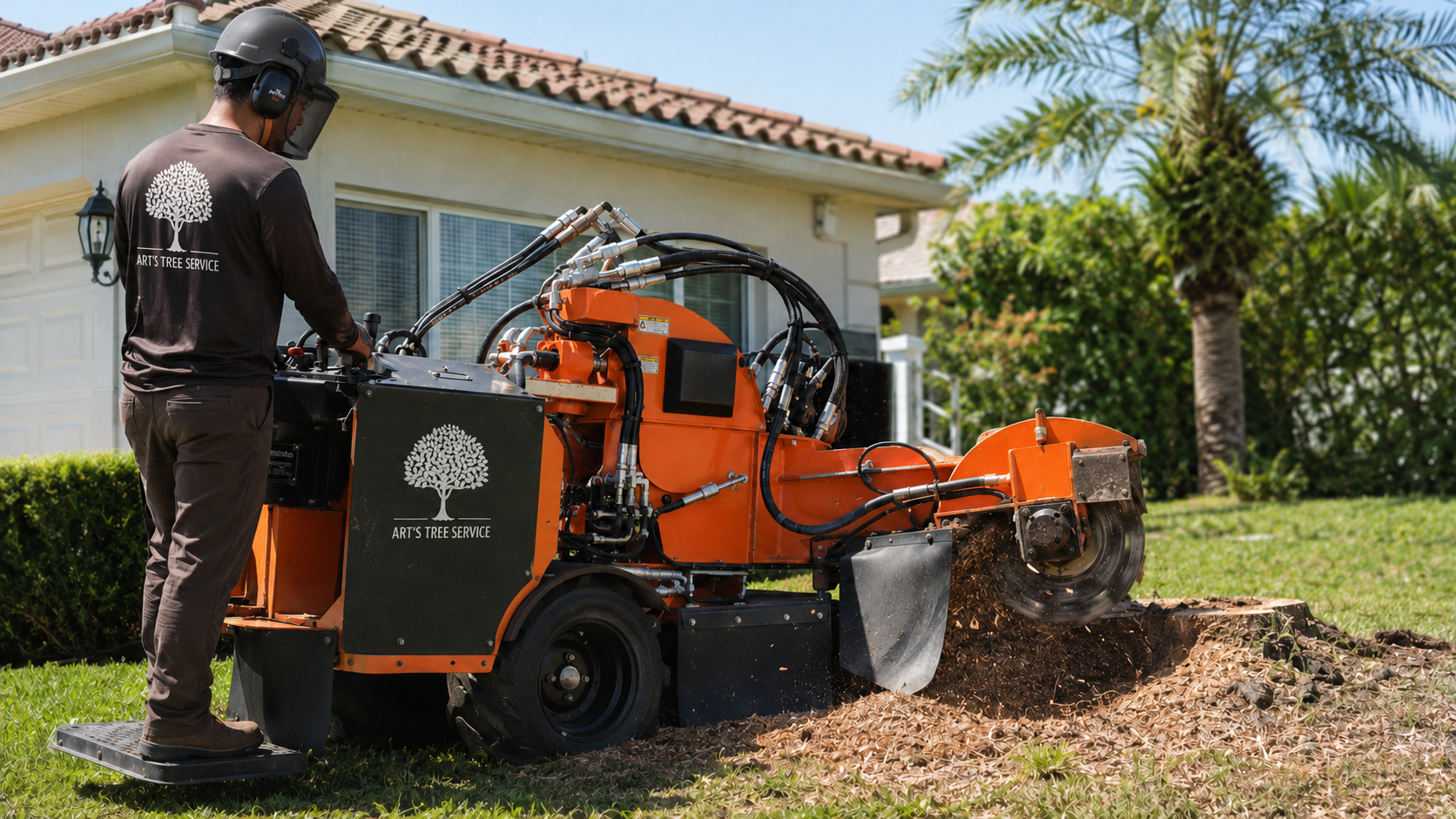
Reclaim usable space and reduce trip or mowing obstacles by defining how the stump, grindings, and surface roots are handled.
Explore Service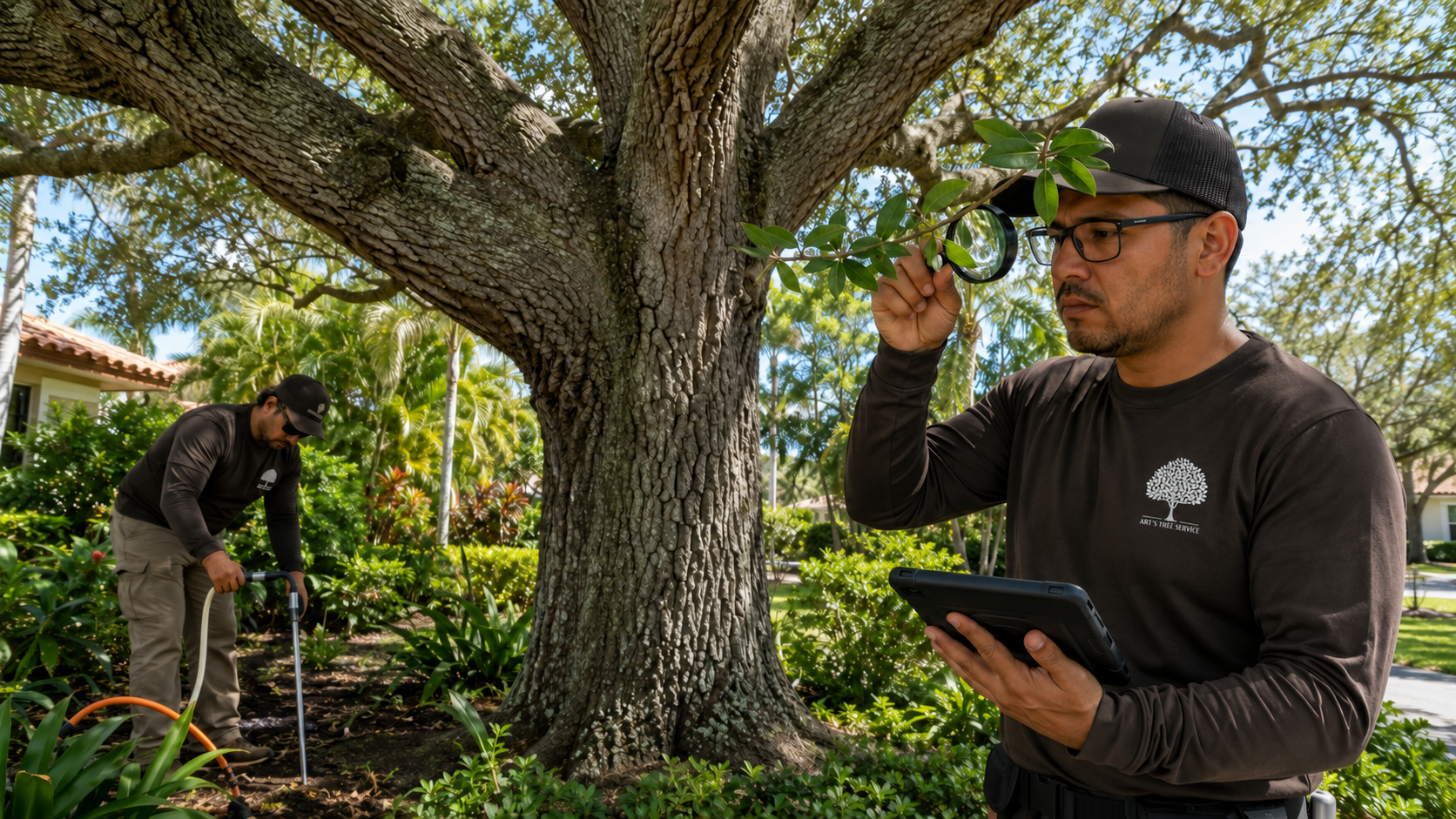
Review decline, pests, disease symptoms, root concerns, or structural questions and identify practical care or monitoring options.
Explore Service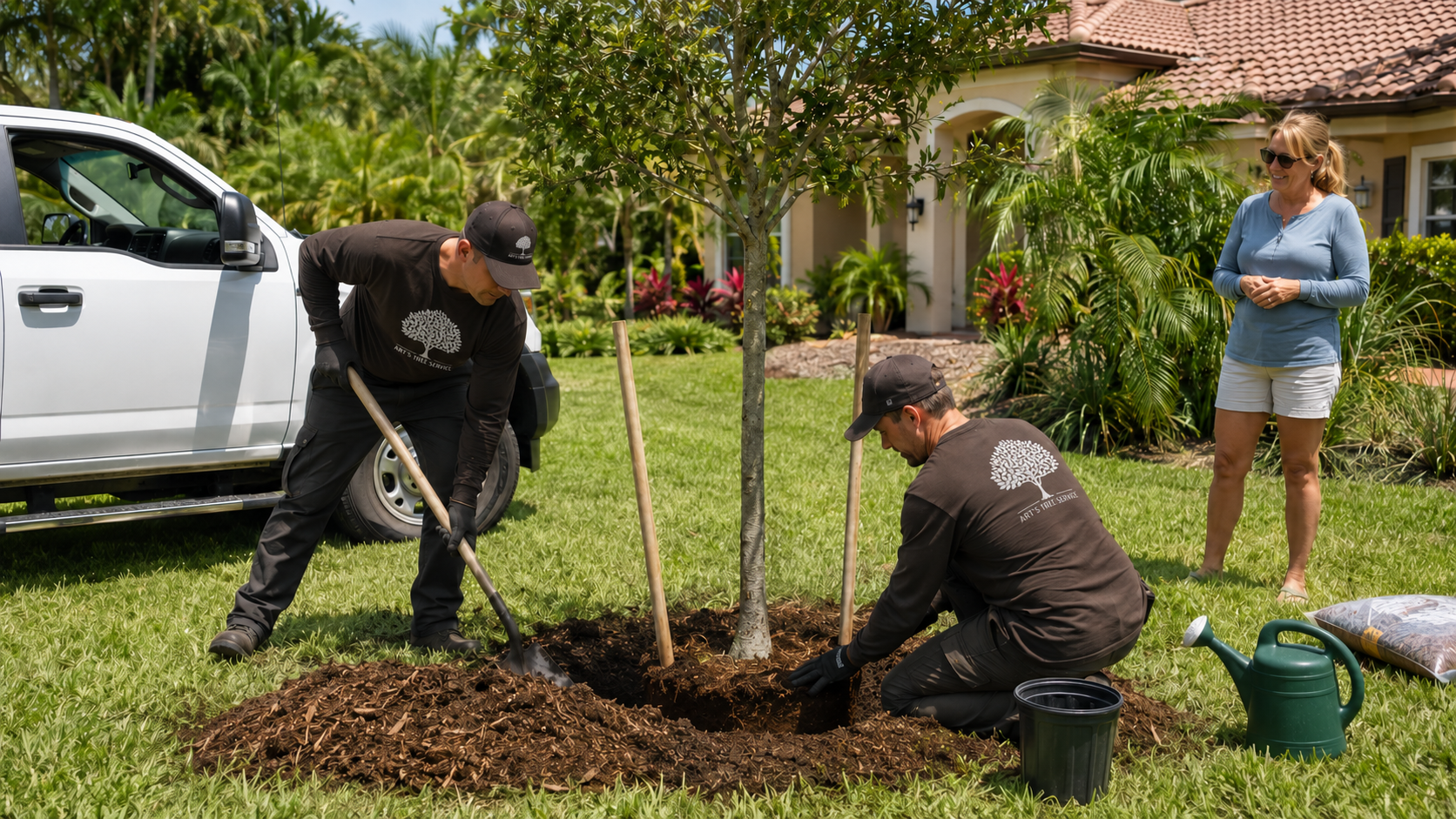
Choose an appropriate tree, placement, and installation approach for Southwest Florida growing conditions and the available property space.
Explore Service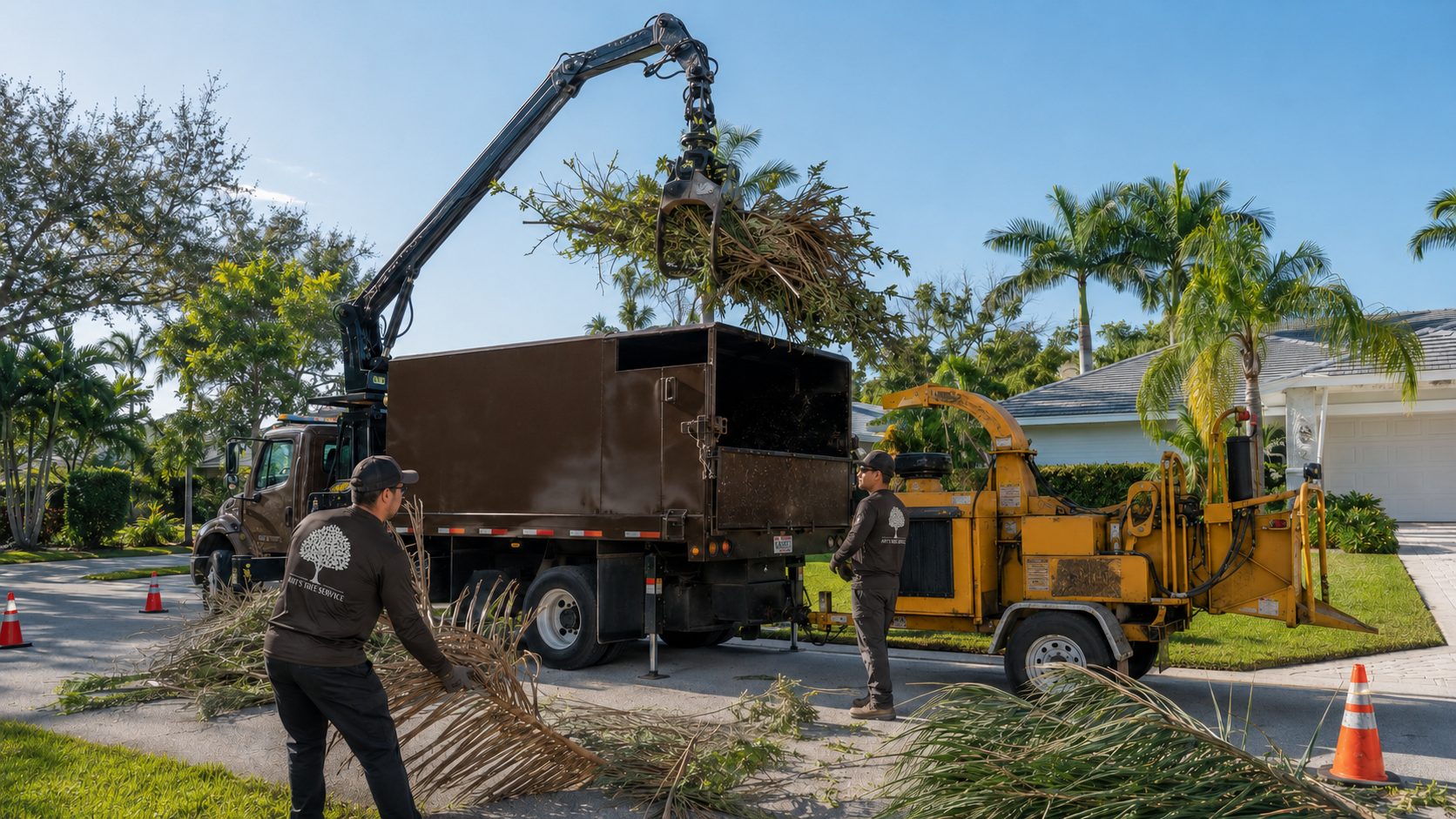
Clear limbs, brush, logs, and storm debris with an agreed plan for loading, haul-away, and the condition of the area afterward.
Explore Service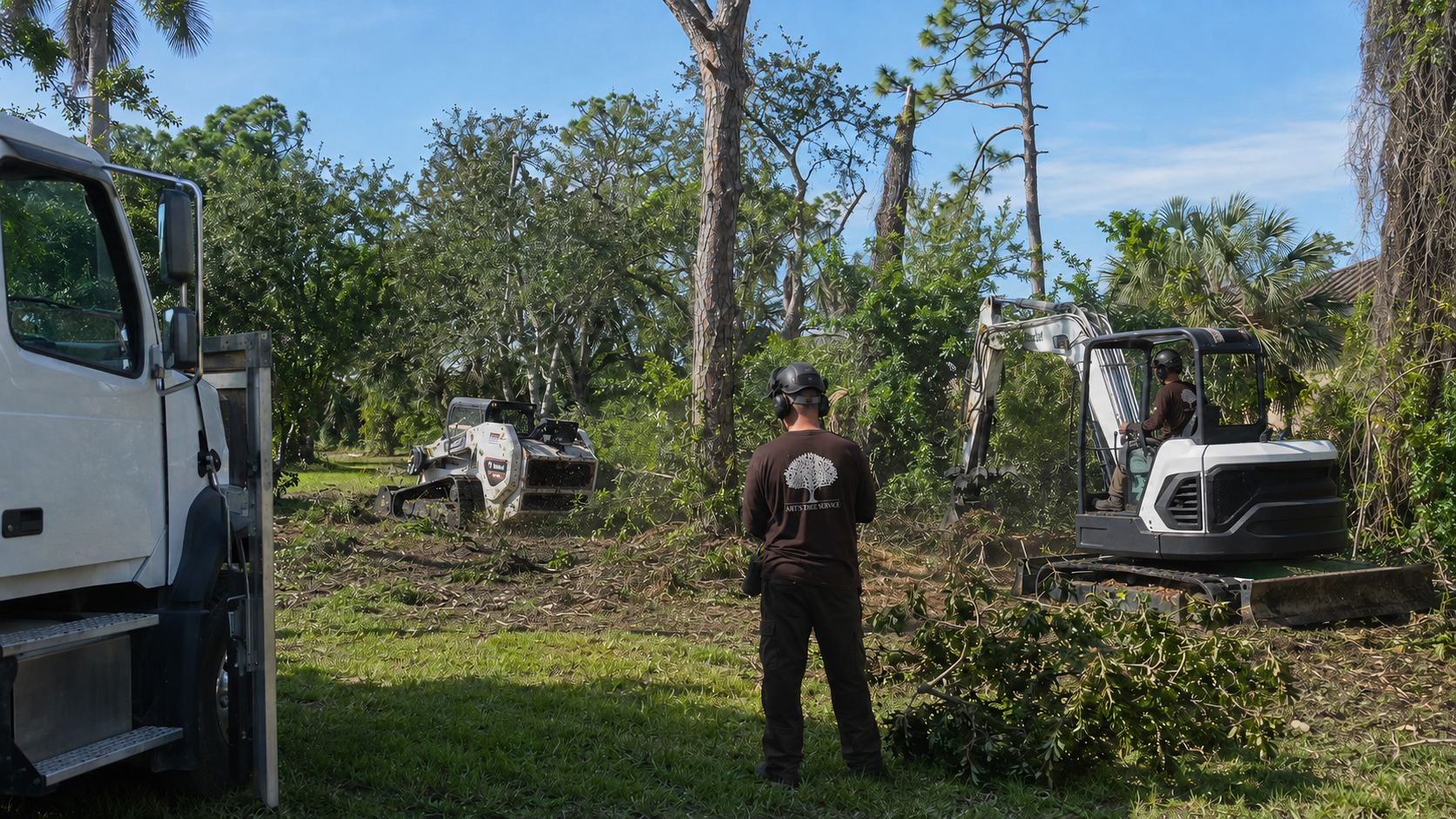
Coordinate tree, brush, and vegetation clearing for construction, landscaping, access, or property cleanup with a defined finished scope.
Explore Service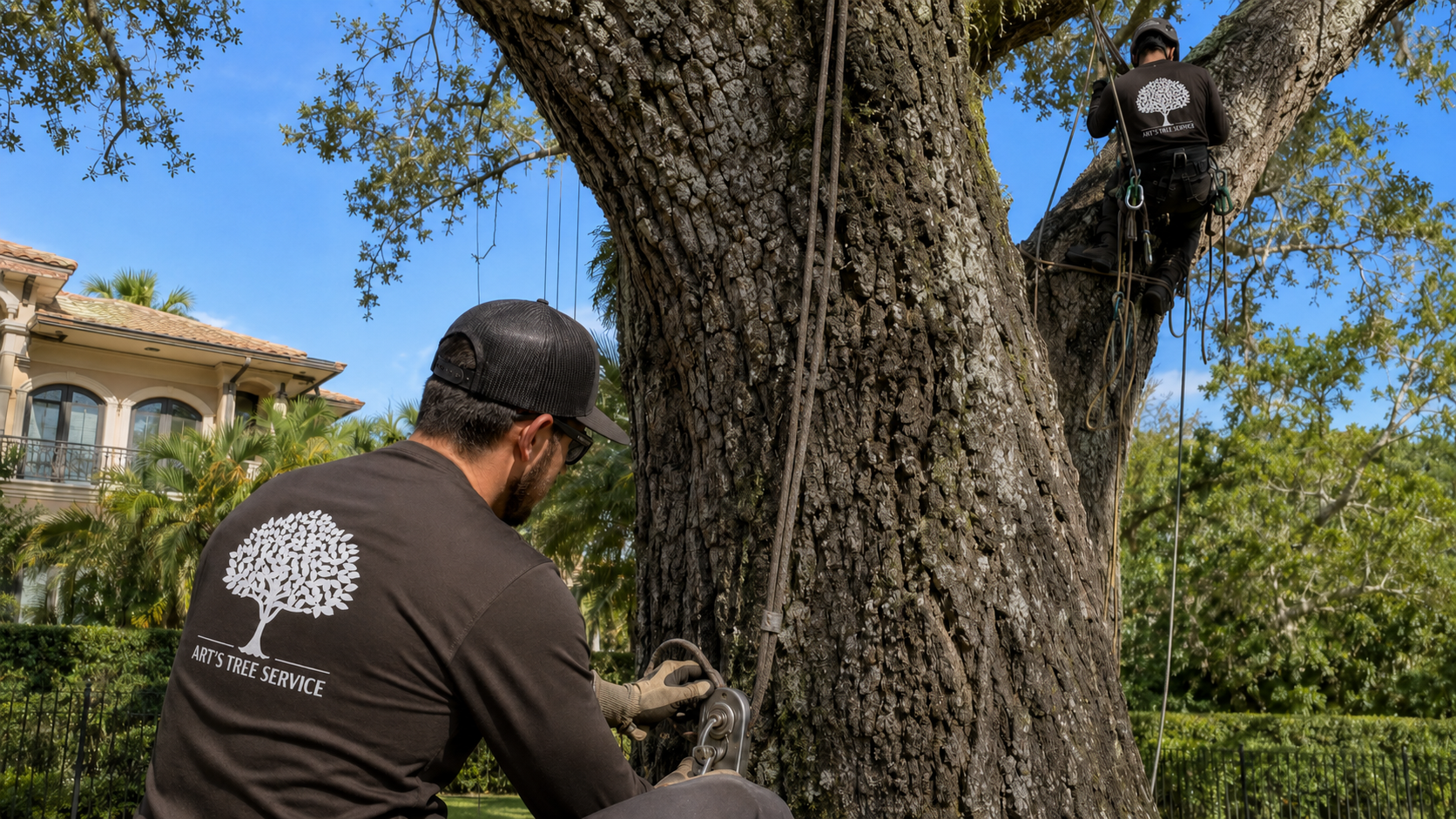
Explore professionally installed lightning-protection systems for valuable mature trees in exposed Southwest Florida landscapes.
Explore Service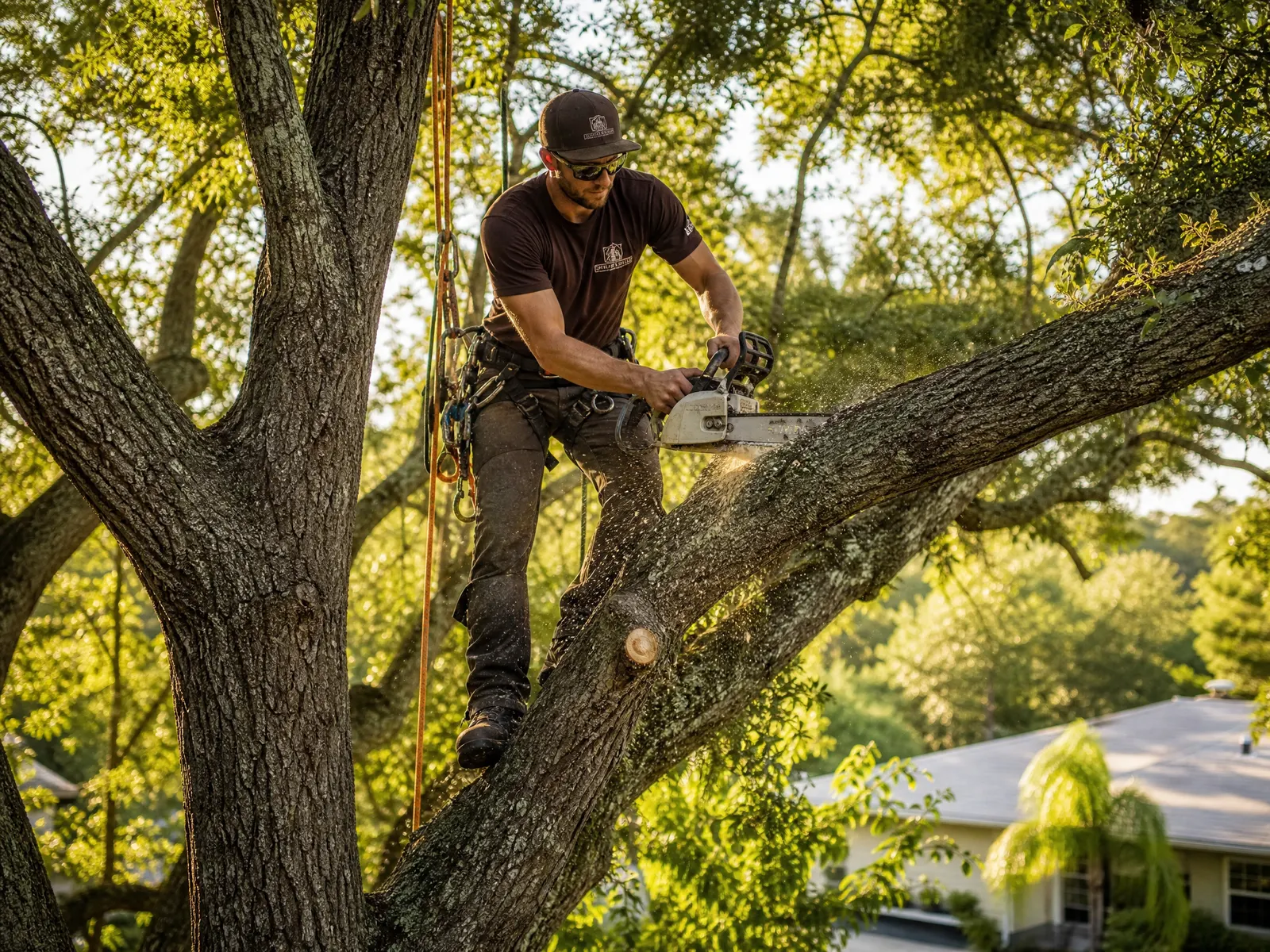
Arrange credentialed guidance for tree-health questions, risk observations, pruning decisions, preservation priorities, and long-term care planning.
Explore ServiceFlexible planning for wooded lots and growing neighborhoods.
A tree at the rear of a deep lot requires more handling than one beside the street. The estimate considers how workers, equipment, logs, and brush travel between the work zone and the staging area so distance does not become a surprise after work begins.
Opening a building area or reclaiming an overgrown edge does not always require clearing every tree. Owners can identify specimens to retain, sightlines to open, and vegetation to remove, creating a more deliberate result than indiscriminate cutting.
After severe weather, the immediate need may be opening a drive or removing hanging material. Decisions about damaged trees that remain standing can follow once access is safe and the condition can be viewed calmly. That sequence reduces pressure to solve every issue at once.
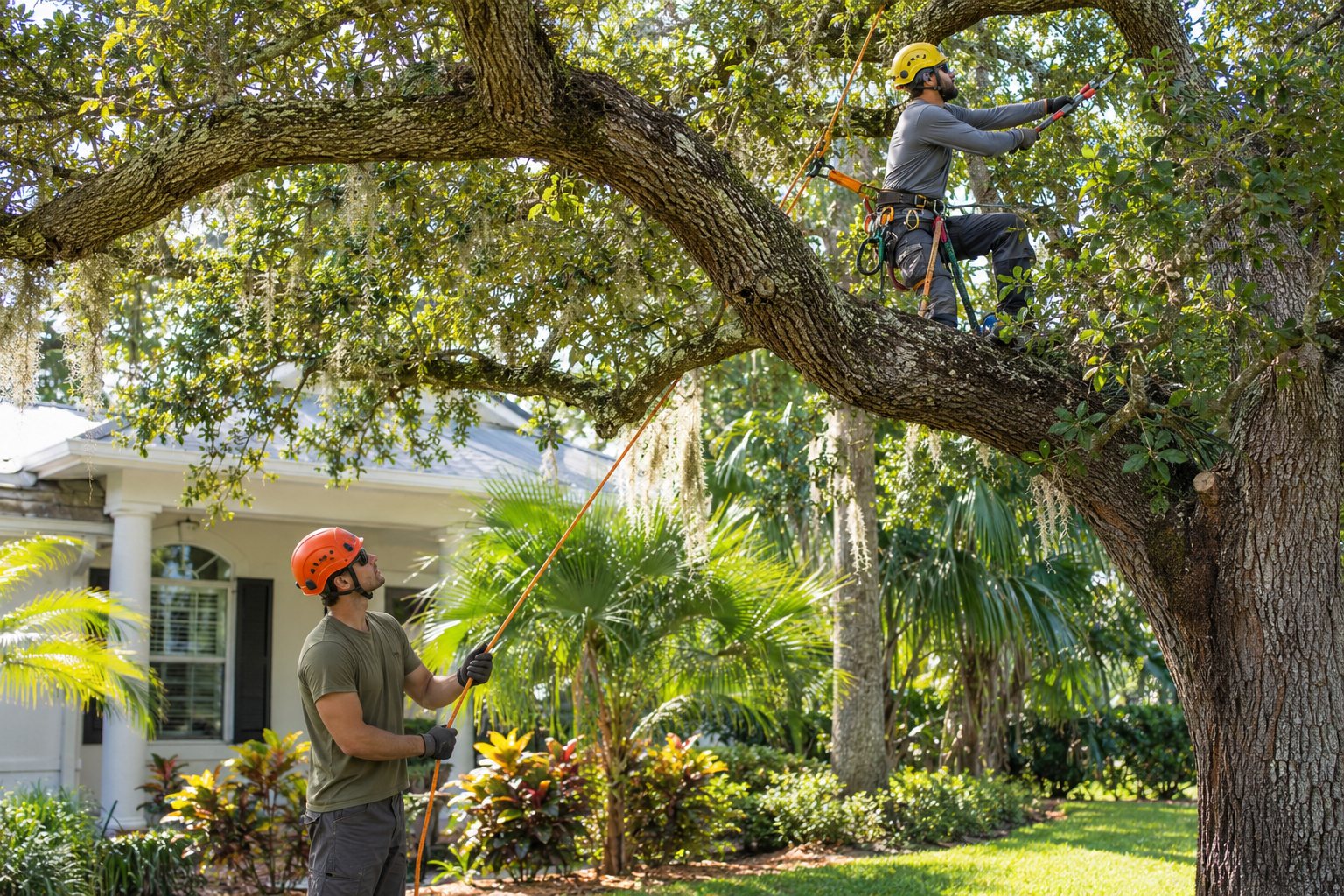
Fast growth and summer weather can change a lot quickly.
Grading, trenching, and changes in drainage can affect roots even when the trunk was left untouched. Trees along a developed edge may also receive more wind than before. Monitoring lean, canopy thinning, and root-zone disturbance helps identify concerns early.
Low limbs, fallen trees, and accumulated brush can obstruct maintenance or water movement along a swale. Targeted removal and debris cleanup can restore access without turning the drainage corridor into a bare strip.
North Port's open areas and tall pines make lightning a recurring concern. A strike may split wood, loosen bark, or cause decline that appears later. Prompt documentation and assessment help owners decide what needs immediate action and what should be monitored.
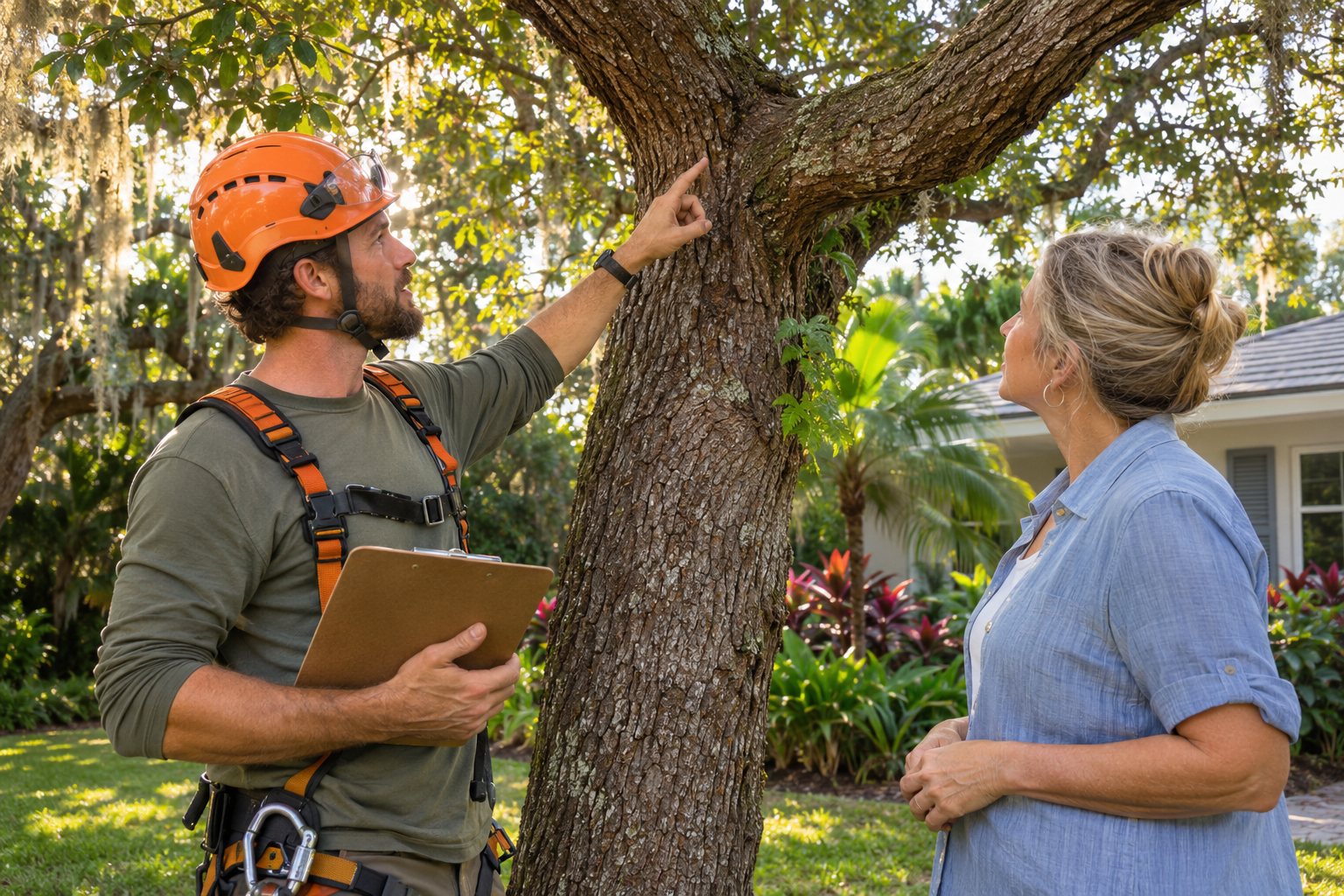
North Port customers frequently ask about wooded-lot access, selective clearing, pines near construction, storm cleanup, and work around drainage features.
Yes. Selective clearing can focus on access, invasive growth, dead trees, a building envelope, or a particular view while retaining chosen canopy trees. Marking priorities before the estimate helps define what stays, what goes, and how debris will be processed.
The answer depends on soil firmness, swale dimensions, culvert access, equipment weight, and the location of underground utilities. The crew may use another entry point or smaller equipment. An in-person review is necessary before assuming the swale can be crossed.
Keep clear of hanging limbs and any nearby utility line. The first scope may focus on opening safe access and stabilizing immediate hazards. Remaining cleanup, stump work, and decisions about damaged standing trees can be documented once the urgent obstruction is controlled.
North Port is broad, and travel conditions can vary between dense neighborhoods, canal areas, and larger inland lots. Use the map to identify the general service area, then send the full address and a short description of the trees so availability can be confirmed.
Tell Art's Tree Service which trees concern you, what result you want, and anything the crew should know about access. The on-site estimate is free.