
Which changes should you report after rain or a storm?
Notice what is new and what is persisting. Leaf discoloration, wilting, canopy thinning, branch dieback, or a change near the trunk base can justify a health evaluation. Note when the change began and whether the ground flooded, roots were disturbed, or branches were damaged.
Some observations deserve urgent attention rather than a routine health appointment: a new lean, lifting soil around the roots, a fresh trunk split, or broken limbs suspended overhead. Keep people and pets away and describe the condition when calling. Green leaves do not establish that the supporting structure is sound.
UF/IFAS Extension Sarasota County's post-storm checklist recommends monitoring for delayed root damage after storms. A tree that remains upright immediately after an event may still need follow-up. That does not mean every tree exposed to rain is diseased or unsafe.
Art's serves North Sarasota, Fruitville, The Meadows, Gillespie Park, and residential areas near Celery Fields, as outlined in its Sarasota neighborhood service coverage. Report the symptoms and recent site changes at your own property so the evaluation can focus on the cause rather than assume that every tree in the area has the same problem.
What does a tree health evaluation check?
Art's tree health care service examines the tree and its setting. The evaluation can consider foliage, branch structure, trunk condition, the visible root zone, pests, disease symptoms, and nutrient-related concerns. A useful history also includes recent digging, irrigation changes, soil buildup, or other work near the tree.
Prepare a short record for the visit:
- Which tree is affected and whether neighboring trees show similar changes.
- When symptoms began and whether they are spreading.
- Any flooding, wind damage, excavation, or changes in watering.
- Previous treatments and who recommended them.
- Nearby buildings, paths, play areas, or utilities that affect the decision.
Photograph symptoms only from a safe position. Do not climb, cut open a trunk, or excavate roots to collect evidence yourself. The person evaluating the tree should determine whether sampling or additional investigation is necessary.
Why should treatment follow a diagnosis?
A similar visible symptom can have different causes. An unsuitable treatment may fail to address the problem while delaying a more useful step. Ask what condition the recommendation addresses, what evidence supports that conclusion, and what improvement or change should be monitored.
Treatment might involve correcting a contributing site condition or addressing a diagnosed pest or disease issue. It should not be described as a routine cure for every declining tree. Confirm who will perform any treatment and what follow-up is included before authorizing it.
Avoid automatically adding fertilizer to a tree with suspected storm-damaged roots. The Sarasota UF/IFAS post-storm guidance specifically cautions against fertilizing root-damaged trees. Discuss the cause of decline first.
When is disease treatment not appropriate?
Some conditions cannot be cured, and some structural problems cannot be solved with a spray, injection, or fertilizer. A recommendation may focus on removal or another risk-management step instead of treatment when the evidence supports it.
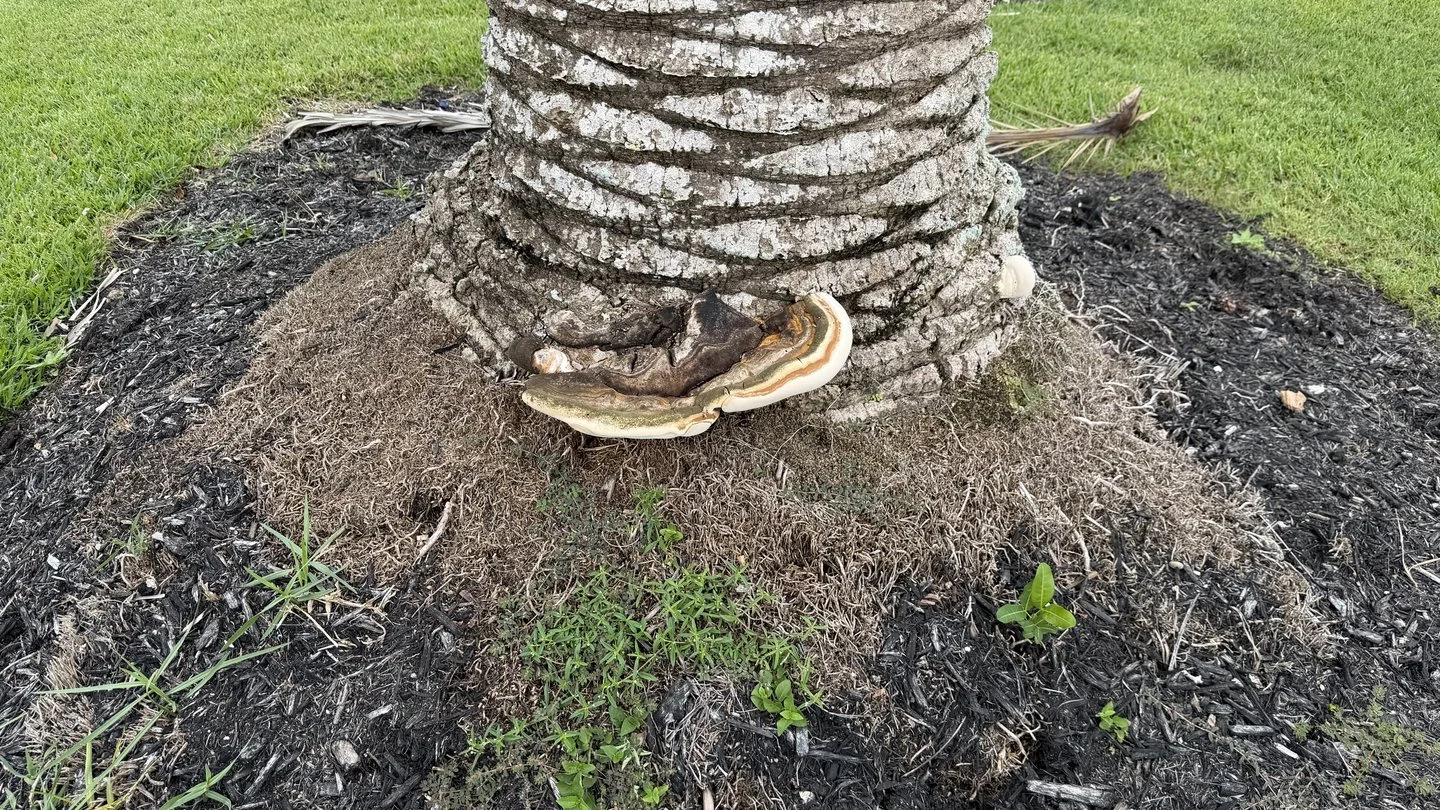
One important palm example is Ganoderma butt rot. UF/IFAS guidance states that there are no cultural or chemical controls that cure an infected palm. A shelf-like conk attached to the lower palm trunk is a serious finding requiring professional attention. Do not diagnose every mushroom in a yard as this disease or assume a photograph establishes the condition of a different tree.
Ask the evaluator to explain the limits of the available options. An honest recommendation may save a tree by avoiding unnecessary removal, or it may avoid spending money on a treatment that cannot resolve the relevant concern.
How are tree health and tree safety connected?
Health and structural condition overlap, but they are not interchangeable. A tree can have foliage and still have a significant structural defect. A stressed tree may also be recoverable without removal. The location of people and property matters when deciding what should happen next.
For visible warning signs, read seven signs your tree may be dead or dying. For a changed lean, see when a leaning tree needs professional attention. These guides help describe a concern; an on-site evaluation provides the property-specific recommendation.
What should your next step be?
For a non-emergency concern, request a tree health evaluation or call (941) 877-1317. Explain the symptoms and ask whether you need a paid arborist consultation with written findings or an estimate for defined work.
Before approving a treatment, request an explanation of the diagnosis, proposed scope, relevant limitations, and follow-up. If removal is recommended, ask why care or pruning would not appropriately address the concern. The goal is a reasoned choice for the tree, rather than a predetermined service.
Frequently asked questions
Does Art's offer tree disease treatment in Sarasota?
Yes. Art's Tree Service offers tree health assessment and disease treatment in Sarasota and Manatee County. Treatment recommendations depend on the diagnosis and are not appropriate for every tree.
Does leaf loss after a storm mean a tree is dying?
Not by itself. Species, the pattern of damage, root condition, and changes over time matter. Persistent decline or structural changes should be evaluated professionally.
Should I fertilize a tree with storm-damaged roots?
Do not add fertilizer automatically. UF/IFAS Sarasota guidance cautions against fertilizing root-damaged trees; arrange an evaluation and discuss the cause of decline first.
Can every tree disease be cured?
No. Some diseases and structural conditions cannot be resolved with treatment. An evaluation should explain whether care, monitoring, further investigation, or removal is appropriate.
About the publisher
Art's Tree Service provides insured tree care across Sarasota and Manatee County and works with Francena Davis, ISA Certified Arborist (Cert. #FL-9927A). This guide is general education and does not diagnose a tree from symptoms alone.