
A shade tree can look fine from the driveway while one part of its canopy slowly declines. Or it can drop leaves and look alarming even though the change is normal for its species. Knowing the difference starts with noticing what has changed, not deciding from a single brown leaf.
For homeowners in Sarasota, Osprey, Siesta Key and nearby communities, the practical question is simple: should this tree be monitored, treated or evaluated for removal? These seven signs will help you describe the problem when you call for help.
Safety comes first. A newly leaning tree, lifting soil around its base, a fresh trunk split or a hanging limb over an occupied area needs urgent professional evaluation. Keep people and pets away. If a tree touches a power line, contact the utility. For a downed line or an immediate emergency, stay far away and call 911 or FPL at 1-800-468-8243. Do not touch the tree, wire or nearby debris.
1. Is the canopy getting thinner or failing to leaf out?
A canopy that becomes noticeably sparse, especially in one section, deserves attention. Compare the tree with older photos and similar trees of the same species nearby. Look for areas that remain bare while other branches are growing.
Leaf loss alone does not establish that a tree is dead. Florida oaks vary in their seasonal behavior, and some naturally shed foliage. Drought can also cause canopy thinning. The timing, pattern and persistence of the change help separate normal leaf turnover from a health problem.
Make a note of when the thinning began and whether it followed a dry period, prolonged wet soil, construction or a storm. Our Sarasota seasonal tree care guide explains why the local growing season matters.
2. Are bare branch tips spreading through the tree?
Progressive branch dieback means more of the crown is losing living growth. A few shaded interior twigs can die without the entire tree failing, but multiple bare tips or an expanding dead section should be assessed.
Do not climb the tree, pull on branches or stand underneath questionable limbs to test them. Describe what you can see from a safe location. If pruning is appropriate, our tree trimming and pruning service can address a defined need. Cutting away visible deadwood does not, by itself, explain why the branches died.
3. Are leaves or needles staying wilted, yellow or brown?
Persistent discoloration or wilting can signal stress from water conditions, root injury, pests or disease. It is a reason to investigate, not a reliable diagnosis from color alone. On a pine, a rapid change across much of the canopy, especially with resin, small holes or sawdust-like material on the bark, warrants prompt attention.
UF/IFAS guidance on declining pines cautions that bark beetles can be associated with trees that were already stressed or dying. Identifying the cause matters before choosing a treatment.
Avoid responding with extra fertilizer, repeated pesticide applications or more irrigation without checking the problem. Watering an already saturated root zone will not correct poor drainage. Our tree health care page explains the role of evaluating the tree and its growing conditions.
4. Is the trunk developing fresh cracks, wounds or exposed wood?
A fresh split, an enlarging cavity or a damaged area on the trunk can indicate structural trouble. Foliage may remain green even when the wood supporting the tree is compromised.
Some species naturally shed bark, so peeling alone is not proof of death. Note whether the change is new, whether it follows an injury and whether other symptoms are present. Keep your distance from fresh splits. Do not peel off bark, drill the trunk or fill a cavity as a home remedy.
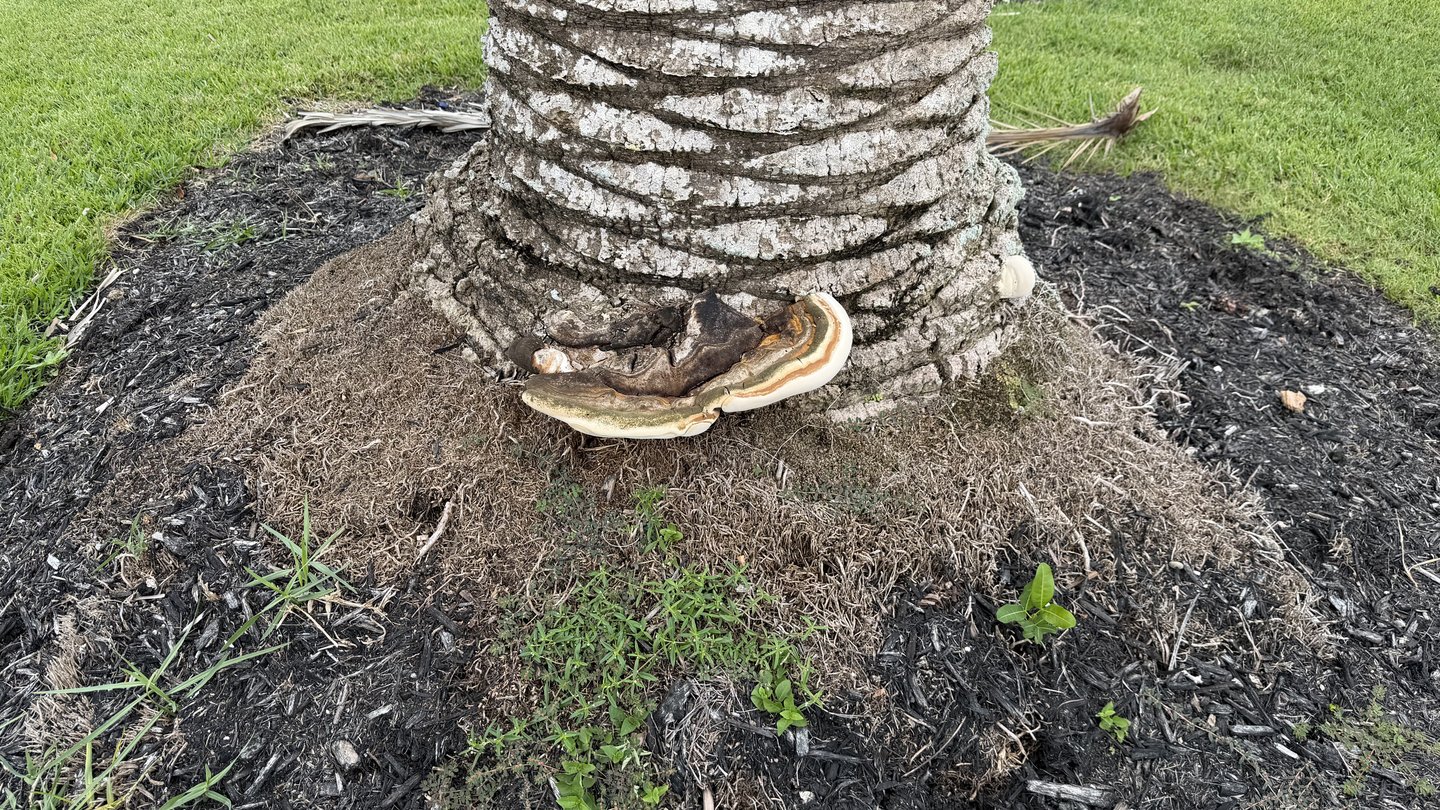
5. Is fungal growth attached to the trunk or major roots?
Shelf-like fungi on a trunk or at the root flare can indicate wood decay. Mushrooms scattered in mulch or lawn are a different observation and do not automatically mean the tree must come down. Have the growth and its attachment evaluated.
Palms need particular care. UF/IFAS identifies a conk on a living palm trunk as an important sign of Ganoderma butt rot. There is no established cure for this disease, and UF/IFAS recommends removing an affected palm as soon as possible after conks appear. Arrange professional evaluation rather than waiting for the canopy to die. The absence of a conk does not rule out the disease.
Brown palm fronds alone are not a reason for aggressive pruning. See our guide to palm trimming mistakes and hurricane cuts before removing living foliage.
6. Has the soil or root area changed around the tree?
Recent trenching, a driveway project, added fill or heavy equipment near a tree may explain decline that appears later. Roots need suitable soil conditions as well as protection from physical damage. Tell the assessor about work near the tree even if the trunk was never touched.
Surface roots alone are not evidence of a dying tree. The concern is damage, decay or changes to the growing environment. Do not cut roots to clear a path or try to expose buried roots yourself. An arborist assessment can help connect the site history with the symptoms.
7. Is the tree leaning more than it used to?
A new lean, particularly with fresh soil cracking or lifting roots, may indicate a loss of anchorage. This needs urgent attention even when the leaves are green. A longstanding lean without recent movement is a different situation, but a homeowner cannot determine its safety from the angle alone.
Do not try to pull a mature tree upright or cut branches to “balance” it. Keep the area clear and request help. Our storm-damaged tree guide covers what to do after severe weather, and our emergency tree service page explains how to contact us for urgent tree hazards.
Can a declining tree be saved, or does it need removal?
The answer depends on the cause, the remaining living structure and what could be struck if the tree or a branch fails. A health assessment may lead to targeted care, planned pruning or monitoring. Irreversible decline or unacceptable structural risk may make professional tree removal the appropriate option.
Ask for an explanation of the findings and the proposed work. If removal is recommended, our Sarasota tree removal cost guide outlines the factors that affect an estimate. Confirm any applicable local requirements before the work begins.
What should Sarasota homeowners do next?
October is still within hurricane season, which Sarasota County identifies as June 1 through November 30. Do not postpone a newly discovered hazard until winter. For non-urgent questions about plant symptoms, UF/IFAS Extension Sarasota County's Plant Clinic offers a local diagnostic resource. Its plant guidance does not replace an on-site tree safety assessment.
For a tree without an immediate hazard, gather a few observations from a safe distance: when the change began, which side looks different and whether there has been irrigation trouble, excavation or storm damage. Photos can help explain the concern, but they do not replace an on-site assessment.
Concerned about a tree near your home, driveway or pool cage? Call Art's Tree Service at (941) 877-1317 or request a tree health assessment. Describe the symptoms and ask what the assessment includes, whether additional diagnostics are needed and what any separate fees would be. The goal is a clear recommendation, whether that means preserving the tree or planning its removal.
Frequently Asked Questions
Art's offers free estimates for proposed tree work. Formal arborist consultations with written findings are paid services; ask about the scope and price when scheduling.
How can I tell whether my tree is dead or just stressed?
Leaf loss or brown foliage alone is not enough to tell. Species, season, living buds and branches, root condition and recent changes all matter. A professional assessment can distinguish temporary stress, localized dieback and whole-tree death.
Can a tree with green leaves still be unsafe?
Yes. Green foliage does not rule out trunk decay, weak branch attachments or damaged supporting roots. A new lean, fresh soil movement or a split trunk deserves prompt professional attention even when the canopy looks green.
Do mushrooms mean my tree needs to be removed?
Not automatically. Mushrooms in lawn mulch may be unrelated to the tree, while fungal growth attached to the trunk or roots warrants evaluation. A conk on a living palm is a particular concern because UF/IFAS identifies it as a sign of Ganoderma butt rot.
Can a dying tree be saved?
Some declining trees improve when the cause is identified and corrected. Others have irreversible disease or structural damage that makes removal appropriate. Treatment should follow an assessment rather than a guess based on one symptom.
Should I wait until after hurricane season to check a declining tree?
No. Arrange an assessment when you notice persistent decline, and seek urgent help for a new lean, lifted roots, a split trunk or hanging limbs. October is still within the Atlantic hurricane season, but tree hazards deserve attention throughout the year.
How do I request a tree health assessment in Sarasota?
Call Art's Tree Service at (941) 877-1317 or use the website contact form and select tree health care. Describe the changes, when they started and any nearby structures or utilities. Ask what the assessment includes and whether any diagnostic work carries a separate fee.
About the author: Art's Tree Service provides tree care for Sarasota and Manatee County properties and works with an ISA Certified Arborist. This guide is educational; an on-site assessment is needed for recommendations about an individual tree.