
Quick Answer
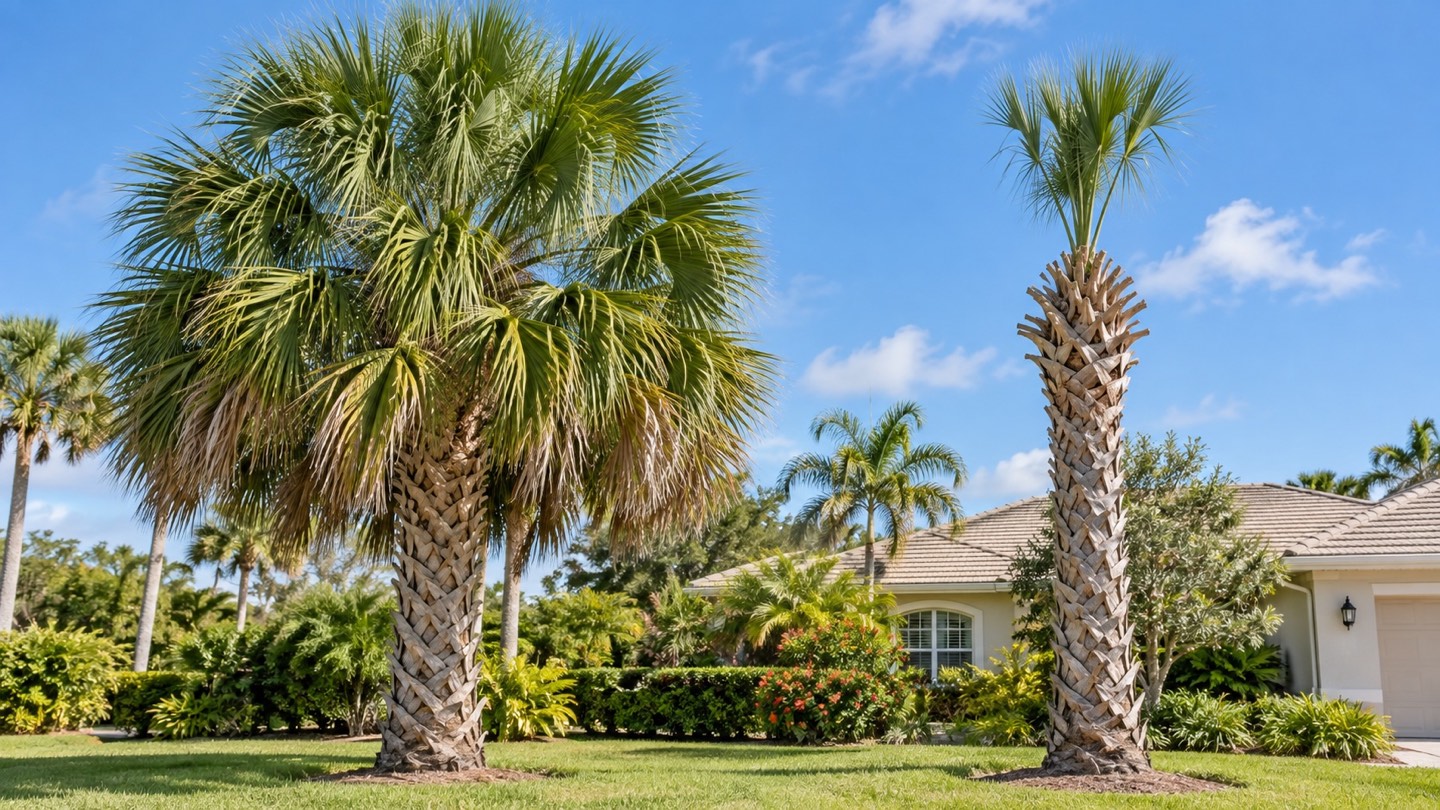
A hurricane cut removes most of a palm's fronds and leaves only a small upright tuft. Despite the name, this severe pruning does not prepare a palm for a hurricane. UF/IFAS reports that overpruned palms were more likely to suffer crown damage during major Florida storms than palms with fuller canopies. Proper palm trimming generally preserves green fronds and removes only dead, hazardous or specifically problematic material.
Hurricane cuts and other aggressive palm-trimming practices do not make Sarasota palms safer. Removing healthy green fronds reduces the foliage a palm uses for photosynthesis and nutrient movement, and repeated overpruning can weaken the crown. For homeowners researching palm tree trimming in Sarasota, this Art's Tree Service guide explains the most common mistakes, what the 9-to-3 rule actually means and when pruning is appropriate.
Key Takeaways
- A hurricane cut is severe overpruning, not hurricane preparation.
- Healthy green fronds should normally remain on the palm.
- The 9-to-3 clock rule is an outer limit, not a goal for every pruning visit.
- Yellowing fronds can indicate a nutrient problem and may still benefit the palm.
- Cuts should not damage the trunk, leaf bases or central growing point.
- Flower and fruit stalks may be removed when they create a maintenance or safety concern.
- Tall palms, heavy fronds and work near utilities should be handled by qualified professionals.
What Is a Hurricane Cut on a Palm Tree?
A hurricane cut is the removal of most lower and middle palm fronds, including living green foliage, until only a narrow group of upright fronds remains. The finished palm may resemble a feather duster or pineapple.
The practice is often promoted as a way to reduce wind resistance before hurricane season. That reasoning sounds plausible, but it does not reflect current UF/IFAS guidance. Palms are naturally flexible, and their older fronds help support and protect the younger crown. Removing that support can leave the newest, least hardened fronds and the central growing point more exposed.
The UF/IFAS Sarasota County guide to common tree and palm care failures specifically warns Sarasota homeowners and associations that overpruning can place palms at greater risk during storm season.
Why Can Hurricane Cuts Harm Sarasota Palms?
Hurricane cuts can harm palms because they remove functioning foliage the palm needs and change the protection around its only growing point. Unlike a branching hardwood tree, a typical single-trunk palm depends on one central bud to produce new leaves. Serious damage to that bud can kill the palm.
UF/IFAS research and post-storm observations identify several concerns:
- Reduced photosynthesis: Green fronds manufacture carbohydrates that support growth and recovery.
- Interrupted nutrient movement: Older fronds can transfer mobile nutrients to newer growth. Removing them too early can intensify visible deficiencies.
- Less protection around the crown: A full canopy and older leaf bases help support and protect younger foliage and the central bud.
- Smaller future growth: Repeated overpruning can contribute to smaller leaves and a narrowed trunk below the crown, sometimes called pencil-pointing.
- Greater storm vulnerability: Observations after major Florida hurricanes found more crown failure among severely hurricane-cut palms than among palms with fuller canopies.
No pruning method can make a palm hurricane-proof. The practical goal is to remove specific hazards without sacrificing healthy foliage.
Mistake 1: Removing Healthy Green Fronds
One of the most common palm-trimming mistakes is removing green fronds simply to create a neat, narrow shape. A green frond is still working for the palm even if it hangs lower than the newest leaves.
UF/IFAS generally recommends retaining green leaves and removing fronds only after they are fully brown, unless a frond is broken, hazardous or interfering with the central bud after storm damage. A palm with a full, rounded canopy may look less manicured than a hurricane-cut palm, but that fuller canopy is usually the healthier result.
Homeowners should be cautious when an estimate promises to make every palm look identical. Different palm species have different canopy forms, leaf attachments and self-cleaning habits.
Mistake 2: Treating the 9-to-3 Rule as the Desired Shape
Imagine the palm canopy as the face of a clock. The horizontal line from 9 o'clock to 3 o'clock is widely used as the maximum pruning boundary. Fronds above that line should not be removed for routine appearance work.
The rule is a limit, not an instruction to remove every frond below the line. UF/IFAS Gardening Solutions recommends keeping a round, full canopy and generally removing only fully brown fronds. If a palm is routinely cut back to the 9-to-3 line at every visit, it may still lose useful foliage unnecessarily.
A responsible pruning decision starts with the condition and purpose of each cut, not a predetermined silhouette.
Mistake 3: Cutting Off Yellow or Partly Green Fronds Without Investigating
Yellowing or browning fronds are not always dead. They may still contain green tissue and may be supplying the palm with energy or mobile nutrients. Their discoloration can also be evidence of a nutrient deficiency, drainage problem, root stress or another health issue.
Removing the symptoms without identifying the cause can make the palm look cleaner temporarily while the underlying problem continues. It may also remove tissue the palm is using to move nutrients into newer leaves.
If several fronds are yellowing, the better next step may be an assessment through Art's tree health care and arborist consultation service, not increasingly severe pruning.
Mistake 4: Cutting Into the Trunk, Leaf Bases or Central Bud
Palm pruning should remove the intended frond without cutting into living trunk tissue. Pulling, tearing, shaving or cutting too deeply can create wounds that may become entry sites for decay organisms, diseases or insect pests. UF/IFAS notes that wounds caused by climbing spikes do not heal and recommends never using spikes to prune palm leaves.
The central bud, also called the apical meristem or growing point, is especially important. It sits near the top of the trunk where new fronds emerge. Cutting equipment should never enter that area.
Excessive shaving of old leaf bases to create a smooth or decorative trunk can also cause avoidable wounds. The appearance of the trunk should never take priority over protecting living tissue.
Mistake 5: Using Unclean Tools on Multiple Palms
Certain Fusarium wilt pathogens can be transmitted locally through contaminated pruning equipment. This concern is documented for queen palms, Mexican fan palms and Canary Island date palms. UF/IFAS guidance on Fusarium wilt recommends removing plant debris from tools and disinfecting them before the equipment is used on another susceptible palm.
Tool hygiene does not prevent every palm disease, and not every disease is transmitted by pruning equipment. It does reduce a documented transmission risk for particular Fusarium wilt pathogens. Homeowners, associations and property managers can ask how equipment is cleaned when several susceptible palms will be serviced during the same visit.
Mistake 6: Trimming Every Palm on a Fixed Schedule
There is no universal rule that every palm must be trimmed once or twice each year. Some palms naturally release dead fronds. Others retain them longer and may need periodic removal when dead material could fall over a walkway, driveway, pool area or structure.
The need for service depends on:
- Palm species and mature size
- Whether the palm is self-cleaning
- The number and condition of dead fronds
- Flower or fruit production
- Nearby people, vehicles, roofs and pool cages
- Storm damage or broken fronds
- Access and equipment requirements
The best schedule responds to actual conditions. It should not create pruning work simply because another season has arrived. For broader timing guidance, see What Is the Best Time to Prune Trees in Sarasota, Florida?
Mistake 7: Waiting Until a Storm Is Approaching
Last-minute hurricane preparation is not the time for aggressive palm trimming. Rushed work can lead to unnecessary green-frond removal, poor cuts and unsafe conditions for workers and property owners.
Before hurricane season, inspect palms for fully dead fronds, damaged material, heavy fruit and obvious defects. Address legitimate hazards through planned maintenance. Do not remove healthy foliage in an attempt to make wind pass through the canopy.
After a storm, green fronds that are bent but still attached may continue helping the palm recover. UF/IFAS guidance on restoring trees after a hurricane recommends retaining bent green fronds until new foliage emerges, unless a particular frond creates a hazard or obstructs the bud. For immediate post-storm decisions, review Storm-Damaged Trees in Sarasota: What to Do Next.
What Should Proper Palm Trimming Include?
Proper palm trimming is selective. The objective is to address dead or hazardous material while preserving healthy foliage and protecting the crown.
A reasonable scope may include:
- Removing fully dead, brown fronds
- Removing broken fronds that create a hazard
- Removing flower or fruit stalks when they create a safety, cleanup or maintenance concern
- Making controlled cuts without tearing tissue
- Avoiding cuts into the trunk or central bud
- Cleaning tools between palms
- Protecting nearby roofs, pool cages, landscaping and vehicles
- Collecting and removing the agreed debris
The estimate should identify what will be removed instead of relying on vague language such as "clean up palms." Art's tree trimming and pruning service can evaluate the palm, surrounding property and purpose of the work before defining the scope.
When Should a Sarasota Palm Be Evaluated Instead of Simply Trimmed?
Pruning is not a treatment for every palm problem. Request a professional evaluation when you notice:
- A loose, leaning or shifting trunk
- A damaged or missing central spear leaf
- Sudden collapse of the newest foliage
- Extensive yellowing across several fronds
- A narrowing trunk below the canopy
- Soft, discolored or damaged tissue near the crown
- Repeated decline after fertilization or irrigation changes
- Storm damage affecting the crown or trunk
These symptoms do not automatically mean the palm must be removed. They do mean that cosmetic pruning alone may be the wrong response. An assessment can help distinguish routine maintenance from a health or structural concern.
Frequently Asked Questions
Do palm trees need a hurricane cut before storm season?
No. Hurricane cuts remove healthy foliage and do not make palms hurricane-proof. UF/IFAS guidance recommends retaining green fronds and addressing only dead, broken or genuinely hazardous material.
What is the 9-to-3 rule for palm pruning?
Imagine a horizontal line across the canopy from 9 o'clock to 3 o'clock. Routine pruning should not remove fronds above that line, but the line is an outer limit rather than a target. A full, rounded canopy is generally preferable.
Should yellow palm fronds be removed?
Not automatically. A yellow or partly green frond may still support the palm and may reveal a nutrient or health problem. Identify the cause before removing symptomatic foliage.
Can palm flowers and fruit stalks be removed?
Yes. Flower and fruit stalks may be removed when they create falling-fruit, cleanup or maintenance concerns. The work should avoid damaging nearby fronds, the trunk and the central growing point.
How often should palm trees be trimmed in Sarasota?
There is no universal schedule. Trim when fully dead fronds, broken material or flower and fruit stalks create a defined need. Species, location, self-cleaning behavior and nearby targets all affect the appropriate frequency.
Can I trim a tall palm myself?
Tall palms, heavy fronds, chainsaw work and any work near utility lines can create serious hazards. Homeowners should keep a safe distance and use qualified professionals with the equipment and training required for the site.